
Alderman Spotlight: Brian Hopkins, 2nd Ward
How this was made
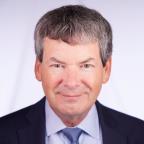
Hopkins, Brian
Chicago City Council · Ward 2
Brian Hopkins has held the 2nd Ward since 2015. He chairs the Committee on Public Safety — one of the highest-profile committee seats in City Council — and sits on ten others. His ward runs from the lakefront high-rises of Streeterville and Gold Coast west through River North, Old Town, Lincoln Park, and out to Ukrainian Village: a strip that Chicago magazine once described as looking like "a video game character with missing pixels." It's also among the city's wealthiest corridors. What Hopkins does with that platform — and whether he's actually using it — is what this profile is about.
The Ward
The 2nd Ward has a population of approximately 58,500 residents, according to the 2023 American Community Survey as aggregated by the City of Chicago Data Portal (dataset: ACS 5 Year Data by Ward). It is one of Chicago's most racially homogenous wards: roughly 72% white, non-Hispanic. Black residents make up about 6.6% of the population, Hispanic or Latino residents about 8.6%, and Asian residents about 8.6%. By income, the ward skews sharply upward — 7,494 families report incomes over $125,000, compared to only 482 families earning under $25,000.
The current ward boundaries were drawn in the 2012 remap, stitching together neighborhoods that don't obviously belong together. Hopkins represents both the Magnificent Mile-adjacent penthouse owner and the Ukrainian Village renter. That tension shapes everything about his legislative calculus.
Committee Assignments
Hopkins sits on eleven committees. The one that matters most is the one he chairs: the Committee on Public Safety. That seat puts him in the room for every debate about CPD technology procurement, police accountability legislation, and public safety funding — and it makes him the alderman most responsible for moving (or stalling) that agenda.
His other assignments include Finance, Budget and Government Operations, Zoning/Landmarks, Transportation and Public Way, Environmental Protection and Energy, License and Consumer Protection (Vice Chair), Committees and Rules, Special Events/Cultural Affairs, Pedestrian and Traffic Safety, and Aviation. A dense portfolio covering city finances, land use, transit, and the environment — Hopkins is positioned as a generalist operator rather than a narrow specialist.
Legislation
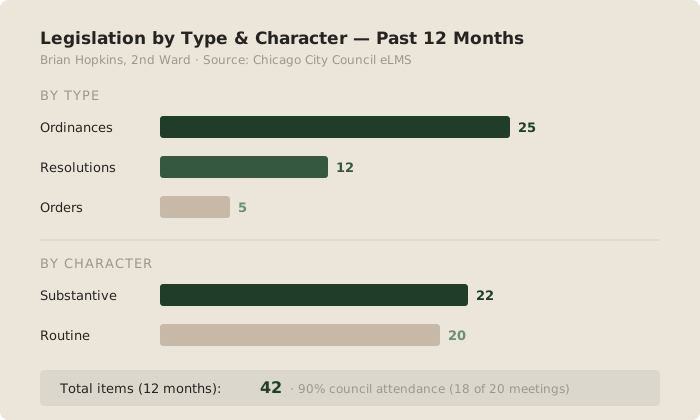
Hopkins's 42 legislation items over the past 12 months, broken down by type and character. Source: Chicago City Council eLMS.
Over the past year, Hopkins introduced 42 items — 25 ordinances, 12 resolutions, and 5 orders. Of those, 22 were substantive and 20 were routine. That's a roughly even split, about average for an active ward alderperson.
The most significant recent item is R2026-0027466, introduced July 22, 2026: a resolution calling on the Chicago Transit Authority to evaluate the feasibility of installing Next Generation Fare Gates throughout all CTA rail stations. It has been referred to the Committee on Public Safety — Hopkins's own committee — which means he controls the timeline. Whether it advances or quietly dies in committee is a meaningful test of whether Hopkins uses his chairmanship to push his own priorities forward.
He also introduced O2026-0027465 on the same date — an honorary street designation for "Honorary Chilli Pepper Way," referred to Transportation and Public Way. And R2026-0026384, a resolution congratulating Dr. Elaine Morgan on her retirement from Ann & Robert H. Lurie Children's Hospital (adopted July 15, 2026). Bread-and-butter ward service work.
Activity
Hopkins attended 18 of 20 recorded council meetings over the past year — a 90% attendance rate. Two absences in a year is nothing alarming. The bigger question is what he's doing when he shows up, and his committee chairmanship provides the clearest answer.
Campaign Finance
In the current 2025–2026 election cycle, Hopkins raised $654,111 and spent $236,539, according to the Illinois State Board of Elections. That's a significant war chest — $654K puts him among the better-funded alderpersons in the city. He has 299 unique donors on record. The top donor breakdown was not available in the pre-computed summary for this cycle, but the total raised suggests broad support likely anchored by real estate, hospitality, and professional services — the industries that dominate the 2nd Ward's economic base. SBE data was computed as of May 2026 and may not reflect the most recent filings.
Transit & Streets
Hopkins sits on both the Committee on Transportation and Public Way and the Committee on Pedestrian and Traffic Safety, so his transit record isn't incidental — it's part of his formal portfolio. That record is worth examining on its own, because it's genuinely mixed in a way that resists easy characterization.
The Smart Streets co-sponsorship (2023)
In early 2023, Hopkins co-sponsored the Smart Streets Pilots ordinance alongside Aldermen La Spata (1st), Reilly (42nd), Vasquez (40th), and Martin (47th). The ordinance — which passed — established a camera enforcement pilot for illegal parking in bus lanes, bike lanes, and loading zones in the central city. At introduction, Hopkins was direct about what it was for: "Our buses will be faster and our bike lanes safer because of the ordinance being introduced today." For a ward that includes some of the city's densest cycling and transit corridors, this was a tangible, on-record pro-active-transportation action. The program, known as Smart Streets, has since expanded.
The February 2026 vote against citizen reporting
Three years later, in February 2026, Hopkins voted against an ordinance that would have let residents submit photographic evidence of commercial vehicles blocking bus lanes, bus stops, and bikeways — essentially a citizen-reporting complement to the camera enforcement he helped create in 2023. The ordinance failed by a wide margin: roughly two-thirds of the council voted no, and Hopkins was among them. Streetsblog Chicago, which has tracked Chicago's bike and transit infrastructure closely, described it as a "potentially lifesaving" measure.
No public explanation from Hopkins for the vote has been located in the research for this piece. The tension between the two votes — co-sponsoring camera enforcement in 2023, voting against citizen reporting of the same infractions in 2026 — is the kind of thing worth asking his office about directly. They may have had substantive objections to the specific mechanism, or concerns about due process for commercial drivers. The public record doesn't say.
The CTA fare gate question
The most recent transit item in Hopkins's record is R2026-0027466, the July 2026 resolution pushing the CTA to evaluate Next Generation Fare Gates across all rail stations. It sits in his Public Safety committee awaiting a hearing. The CTA fare gate issue is primarily about fare evasion and safety at stations — not a pure transit-expansion item — but it connects directly to the quality and usability of the rail system for the ward's considerable transit-riding population. Whether he moves it is, again, the open question.
Voice & Impact: The Chair at Work
Hopkins's most revealing moment in the past year came at the May 12, 2026 Committee on Public Safety hearing — a session he chaired — focused on two stalled city procurements: a gunshot acoustic detection system (the post-ShotSpotter replacement process) and a new police records management system. Multiple key city officials had been invited and didn't show. The CIO wasn't there. Nobody from CPD was there. OEMC sent no one. Hopkins addressed the absence directly on the record:
"They were all given well advanced notice of the date and time of this hearing. Their presence was requested numerous times via email, phone calls, other methods of contacting… Various excuses were offered. But the bottom line is we're here today."
— Alderman Brian Hopkins, Chair, Committee on Public Safety, May 12, 2026 (watch from timestamp)
Later in the same hearing, after Alderman Vasquez raised concerns about federal government surveillance access to any new technology the city might procure, Hopkins responded from the chair:
"It is certainly more relevant today than it was two years ago when we first started having this conversation… But it has also transcended. It goes beyond just the record management system… This is a policy and a legal matter, and I know the Department of Law has been involved in it, so I will approach them initially to lay out the parameters of what access to information we can get."
— Alderman Brian Hopkins, Chair, Committee on Public Safety, May 12, 2026 (watch from timestamp)
That exchange is worth sitting with. Hopkins is chairing a hearing where city agencies blew off the committee's invitation, is fielding pointed questions about federal data access to surveillance tech, and is committing to get answers through the Department of Law. That's functional chairmanship — not glamorous, but it's what moves the machinery.
The ShotSpotter Fight
To understand Hopkins's relationship with Mayor Brandon Johnson, you have to start with ShotSpotter. In September 2024, Hopkins helped lead a 33–14 City Council vote to pass an ordinance stripping the mayor of authority over the city's gunshot detection contract and handing control directly to the police superintendent. Johnson called the measure illegal and vowed a veto. Hopkins publicly threatened to sue the mayor to enforce it — an extraordinary escalation that would have set the City Council against City Hall in court.
"The coalition behind ShotSpotter held," Hopkins said after the vote. "Now the mayor has to recognize that." Johnson ultimately declined to formally veto the ordinance — reportedly because he lacked the votes to sustain one — but he also declined to implement it. ShotSpotter still went offline. Hopkins's coalition won the vote and lost the war.
The episode exposed a real tension at the core of Hopkins's chairmanship: as chair of Public Safety, he can hold hearings, pass ordinances, and issue ultimatums. But if the mayor refuses to execute and the council can't override, the chair's power has a ceiling. Hopkins hit that ceiling on the most prominent public safety fight of his tenure.
The Teen Curfew Saga
Hopkins has spent the better part of two years trying to pass a curfew ordinance targeting "teen takeovers" — large, sometimes violent youth gatherings that have roiled downtown, particularly in Streeterville and the lakefront. The effort has become a case study in the limits of aldermanic persistence.
His first attempt, a "snap curfew" that would have given the police superintendent sole authority to enact a 30-minute-notice curfew anywhere in the city, stalled in spring 2025 amid opposition from activists and fellow alderpeople who called it unconstitutional and a vehicle for over-policing. A revised version muscled through the council later that year — Johnson vetoed it, and held the veto by preventing a 34-vote override. A third revision, introduced in January 2026 and further softened to appease the mayor, failed to pass amid complaints from council members that it had been watered down to the point of uselessness — "more like a legislative placebo," as reported by the Chicago Sun-Times.
As of this writing, no curfew ordinance has passed. Hopkins's signature ward-level priority — the issue most directly affecting his Gold Coast and Streeterville constituents — remains unresolved after more than two years of effort.
Context: The Johnson Relationship
None of the above is accidental. In 2023, Hopkins endorsed Paul Vallas in the mayoral runoff against Brandon Johnson — one of only a handful of sitting alderpersons to back Vallas publicly. Johnson won. Hopkins has chaired the Committee on Public Safety under a mayor he actively campaigned against, on issues — ShotSpotter, curfews, CPD technology — where the two have been in direct, documented conflict ever since.
That context doesn't make Hopkins right or wrong on the merits of any specific fight. But it does explain why his committee chairmanship operates the way it does: with real institutional authority and real political friction, often at the same time. The hearings are substantive. The ordinances pass. The mayor's office doesn't always comply. That's the environment Hopkins is working in, and the record is clear that he's chosen confrontation over accommodation when he thinks the issue warrants it.
The Bottom Line
Brian Hopkins represents one of the city's most economically powerful wards, chairs its most politically charged committee, and has built a $654,000 campaign fund to match. His legislation volume is solid, his attendance is strong, and — unlike many alderpersons — he has a documented record of using his committee chairmanship to pick fights that cost him something politically.
Whether those fights have produced results is a harder question. ShotSpotter is offline. The curfew ordinance hasn't passed. The May 2026 procurement hearing produced accountability pressure but no contract. On transit, he helped build the Smart Streets enforcement program and then voted against expanding its citizen-reporting component three years later — without a public explanation on record. The CTA fare gate resolution (R2026-0027466) sits in his own committee, outcome unknown.
Hopkins is a chair who shows up and swings. The scoreboard is more complicated than the effort.
This piece was researched and drafted with AI assistance. Sources: Chicago City Council eLMS, Illinois State Board of Elections, City of Chicago Data Portal (ACS 5 Year Data by Ward), Chicago Clerk meeting transcripts via Vimeo, Streetsblog Chicago, CBS Chicago, Chicago Tribune, Block Club Chicago, and Chicago Sun-Times. Quote attribution verified contextually against transcript and meeting records.