
Alderman Spotlight: Daniel La Spata, 1st Ward
How this was made
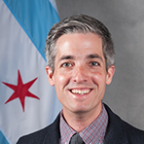
La Spata, Daniel
Chicago City Council · Ward 1
City Council is on its summer break, which makes this a good moment to zoom in on the people doing the work — or not doing it — the other ten months of the year. We're going to profile all 50 wards, starting at the beginning. Here's what the data shows on Ward 1.
The Ward
The 1st Ward covers a dense swath of Chicago's northwest side — Logan Square, Wicker Park, Bucktown, West Town, Ukrainian Village, East Village, Noble Square, and Pulaski Park. It's a ward that has lived through one of the most dramatic gentrification stories in Chicago's recent history: the neighborhoods along the Milwaukee Avenue corridor have seen median rents surge, longtime residents priced out, and new construction competing with 100-year-old two-flats for the same parcels.
La Spata came up as a housing and community development organizer in Logan Square before winning the seat in 2019. That background shows in what he legislates — though whether it's moved the needle on the affordability crisis he's been watching for two decades is a harder question.
Hard ward-level demographic figures tied to the current boundaries (redrawn in the 2023 remap) are limited. The neighborhoods the 1st Ward covers are among the most densely populated on the north side, with a diverse mix of Latino, white, and younger professional residents, though the demographic balance has shifted substantially over the past decade.
Committees
La Spata sits on 11 committees — an unusually heavy load. His assignments include the heavy-hitters:
Committee on Finance
Committee on Budget and Government Operations
Committee on Zoning, Landmarks and Building Standards
Committee on Housing and Real Estate
Committee on Environmental Protection and Energy
Committee on Contracting Oversight and Equity
Committee on Committees and Rules
Committee on Economic, Capital and Technology Development
Committee on Immigrant and Refugee Rights
Committee on Pedestrian and Traffic Safety
Committee on Special Events, Cultural Affairs and Recreation
Finance and Budget together are where the city's big decisions get made — tax structures, appropriations, revenue packages. Zoning and Housing are where the 1st Ward's core tensions play out on a citywide scale. Sitting on both means La Spata is present for the fights that matter most to his constituents. Whether he shapes those fights is the more interesting question.
Legislation
Over the past year (July 2025 through July 2026), La Spata introduced or sponsored 141 legislative items. The breakdown:
101 routine — parking permits, disabled placards, traffic signs, residential permit zones. The administrative plumbing every ward produces.
40 substantive — ordinances and orders that required actual policy decisions.
18 flagged as key legislation — items the system identified as non-routine and consequential.
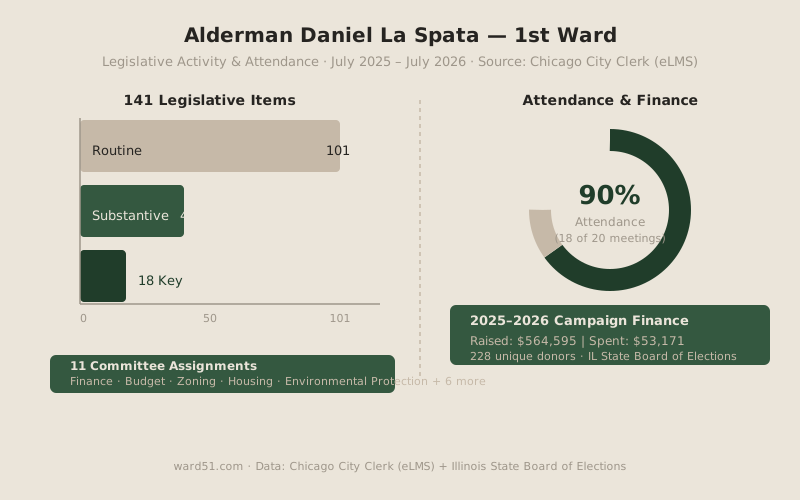
Legislative activity, attendance, and campaign finance for Alderman La Spata, July 2025–July 2026. Source: Chicago City Clerk (eLMS) and Illinois State Board of Elections.
Two items introduced at the July 15, 2026 council meeting stand out as genuinely interesting:
O2026-0027187 — An amendment to the Municipal Code that would exempt "adaptive reuse or rehabilitated strip centers" from prohibitions within the Milwaukee Avenue Special Character Overlay District. In plain English: the overlay district was designed to protect the character of Milwaukee Avenue from generic commercial development. La Spata's proposal would carve out an exception for existing strip-center buildings that are being rehabilitated — giving developers more flexibility to bring those sites back to life without triggering the overlay's restrictions. This is now in the Committee on Zoning, Landmarks and Building Standards.
The tension here is real. Strip centers are generally considered antithetical to the urban fabric the overlay was meant to preserve. But vacant strip centers decaying on key corridors aren't good either. La Spata's approach — exempt rehab, not new construction — is a pragmatic middle ground. Whether Zoning agrees is TBD.
O2026-0027189 — An amendment to Municipal Code Chapter 9-101 adding a new section on "vehicle speed feedback signs" (dynamic speed displays that show drivers their current speed and encourage slowing down) and establishing requirements for how net proceeds from speed camera fines must be spent and reported. This is now in Committee on Budget and Government Operations. Speed cameras have been a politically charged topic in Chicago for years — the reporting and expenditure requirements are the more interesting element here, adding accountability to where the camera revenue actually goes.
Also pending: O2026-0027169, which would amend the Municipal Code to allow additional package goods (liquor) licenses on a portion of West Grand Avenue — a targeted local zoning adjustment currently in the Committee on License and Consumer Protection.
Activity and Attendance
La Spata attended 18 of 20 council meetings in the past year — a 90% attendance rate. That's solid. The two absences don't appear to be outliers; his attendance pattern is consistent. He's in the room.
The 40 substantive items out of 141 total represents a roughly 28% substantive ratio. For context, that's not remarkable — routine ward business always dominates aldermanic output — but the 18 key legislation items suggest he's putting real proposals on the table, not just processing parking permits.
Campaign Finance
In the current 2025–2026 election cycle, La Spata's committee has raised $564,595 from 228 unique donors, while spending $53,171. That's a healthy war chest with relatively modest expenditures — he's building a reserve, not burning cash. The 228-donor count matters: a large and diverse donor base is a healthier sign than a small number of large institutional contributors.
The top donors are not publicly broken out in the pre-computed ward summary, and the detailed SBE filings would require a separate search to surface individual contributors. What the summary shows is a committee that is well-funded but not obviously dominated by any single interest. Source: Illinois State Board of Elections, 2025–2026 cycle.
Voice and Impact
The most revealing window into what an alderman actually does is the transcript record — what they say in committee, whether they ask real questions, whether they push back on the administration or coast through hearings.
La Spata shows up in the Budget and Government Operations Committee in a way that matters. At the December 17, 2025 budget hearing — a six-hour marathon during which the committee considered the city's 2026 appropriation ordinance as amended by the council's alternative revenue package — La Spata was one of the members who pushed the Budget Director on specifics. On false alarm fees, he pressed the administration on why an ordinance that already authorizes fines for false fire alarms produces zero revenue: "It just seems very questionable to me to keep asking taxpayers to pay for positions that we are not filling." When the Budget Director responded that billing infrastructure didn't exist, La Spata wasn't satisfied: he argued the city was conflating "can't" with "choose not to," and said so on the record. (Watch from this point — Budget Committee, Dec. 17, 2025.)
Note: This transcript is professionally captioned, not auto-generated, and La Spata's identification was cross-checked against the meeting roll call. The exchange is attributed to him with reasonable confidence, though the captions identified him variously as "Lespada" and "Autumn of Sparta" in the roll call — the speaker's voice and context are consistent throughout.
That kind of sustained, technically specific engagement — knowing how ordinance authority translates to actual billing processes, understanding the difference between legal authority and operational capacity — is not universal in a 50-member council. La Spata has clearly done the reading.
The Zoning Committee transcript from June 2026 captured a broader comment on housing: "Since 2020, rent in Chicago has surged 38%, more than LA, more than New York, more than Seattle." That's a data point he's apparently carrying into zoning conversations, which tracks with his Milwaukee Avenue strip center proposal — the tension between protecting neighborhood character and actually getting housing units built at a moment when the city's affordability crisis is objectively severe.
The Bottom Line
Daniel La Spata is an alderman who came to the job with a policy background, uses it, and is willing to be specific in committee. His 1st Ward is ground zero for the Chicago housing debate — the neighborhoods that were affordable before the city got interesting and are now expensive in a way that has displaced a lot of the people who made them worth moving to. Whether his legislative output over seven years has meaningfully slowed that process is a harder question than this snapshot can answer.
What the data shows: he shows up (90%), he introduces substantive legislation (40 items flagged, 18 key), he sits on the committees that matter, and he asks pointed questions when the administration comes to get its budget rubber-stamped. That's a higher bar than a lot of his colleagues clear.
It's also a far cry from the structural changes — significant renter protections, community land trusts, meaningful inclusionary zoning — that advocates in Logan Square and Wicker Park have been pushing for since before La Spata took office. He occupies an interesting position: a reform-minded alderman operating within a council that tends to move slowly, on issues where slow movement has real costs for real people.
This piece was researched and drafted with AI assistance and edited by the ward51 team. Data sources: Chicago City Clerk (eLMS) for legislative activity, attendance, and committee assignments; Illinois State Board of Elections for campaign finance (2025–2026 cycle); City Council meeting transcripts via Chicago City Clerk/Vimeo.