
Alderman Spotlight: Pat Dowell, 3rd Ward
How this was made
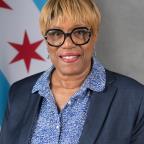
Dowell, Pat
Chicago City Council · Ward 3
The Chair Who Controls the Checkbook
Pat Dowell is the most institutionally powerful alderperson in Chicago City Council — at least on paper. She chairs the Committee on Budget and Government Operations, the committee that reviews the city's annual budget before it goes to a full council vote. She also sits on twelve other committees, including Finance, Zoning, Housing, and Ethics. She has been doing this job since 2007, when she unseated Dorothy Tillman to win the 3rd Ward seat for the first time.
That's a lot of portfolio. The question worth asking — and that this piece tries to answer with actual data — is how she uses it.
The Ward: Bronzeville, the South Loop, and the Gap
The 3rd Ward runs along Chicago's Near South Side and includes some of the most historically significant real estate in the city. According to the ward's own website, its neighborhoods are the South Loop, The GAP, Bronzeville, Fuller Park, and Washington Park. Bronzeville is the cultural anchor — a neighborhood that was the center of Black cultural life in Chicago during the Great Migration, home to the Chicago Defender, Ida B. Wells, and a density of historic architecture that survived when much of the city was being demolished.
Dowell is not just the ward's representative. She's a Bronzeville resident, and her career before elected office was built there. In the mid-1990s, she was the founding executive director of the Mid-South Planning and Development Commission, where she helped direct millions of dollars toward preserving historic Bronzeville landmarks. Her Bronzeville Development Plan won a Burnham Award. Before that, she served as Deputy Commissioner for Neighborhood Planning for the City of Chicago. She has a master's degree in social service administration from the University of Chicago.
This is not someone who stumbled into urban development politics. She spent two decades in it before she ran for office.
Hard ward-level demographic figures for the current boundaries — redrawn in 2023 — are limited, as the Census has not yet released granular data matched to the new ward lines. For neighborhood-level population and income data, the best current source is the Chicago Cityscape demographics snapshot for Ward 3.
Committees: Thirteen Assignments, One That Matters Most
Dowell holds thirteen committee assignments. The headline is the Budget and Government Operations Committee, which she chairs. Every line item in the city's annual budget passes through this committee. That's not ceremonial — in a city that spent years running structural deficits and regularly borrowing to cover pension obligations, the Budget Committee chair has real gatekeeping power over what gets funded and what gets deferred.
Her other seats span Finance, Zoning, Housing and Real Estate, Transportation and Public Way, Education and Child Development, Environmental Protection, Ethics and Government Oversight, Economic and Capital Development, Contracting Oversight and Equity, Committees and Rules, Immigrant and Refugee Rights, and Aviation. It's an unusual range — most alderpersons focus their committee work more narrowly. Whether holding this many seats reflects genuine engagement or institutional vote-counting is a fair question to examine.
Legislation: 95 Items, 26 Substantive
Over the past year (July 2025 through July 2026), Dowell sponsored 95 legislative items through the City Clerk's office. Here's how they break down by type:
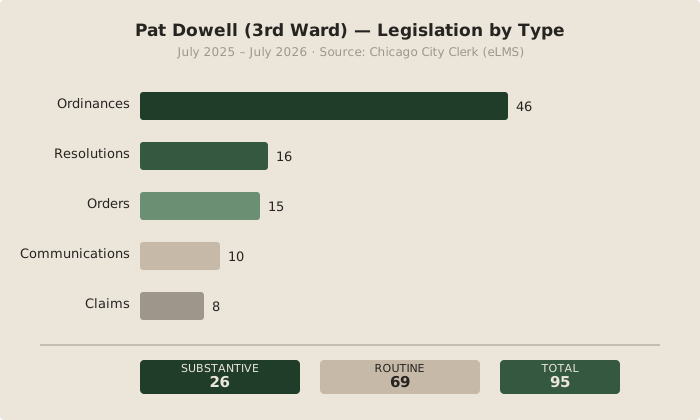
Source: Chicago City Clerk (eLMS), July 2025–July 2026. Data retrieved July 26, 2026.
Of those 95 items, 26 are classified as substantive and 69 as routine. That's a roughly 27% substantive rate — consistent with a senior, institutionally embedded alderperson whose volume reflects committee leadership obligations as much as pure ward-level legislation. The routine work is the stuff that keeps the ward running: disabled parking permits added and removed, tag day authorizations, small claims payments. It matters to the people it helps; it's not where policy gets made.
The most notable recent substantive measure is O2026-0026592, introduced July 15, 2026 — an ordinance exempting a Department of Family and Support Services senior center facility at 225 W. Pershing Road from the physical barrier requirement for commercial driveway alley access. It's in the Zoning Committee. Routine on its face, but it's a DFSS facility, which means it touches the kind of social infrastructure that Dowell's background suggests she prioritizes.
The higher-profile item is O2026-0026950, also introduced July 15, titled "Amendment of Municipal Code Chapter 10-8 regarding charitable solicitation on public way." The Clerk's system flags it as key legislation, and it's headed to the Finance Committee — which Dowell also sits on. The details of the amendment aren't yet in committee records, but changes to charitable solicitation rules on public sidewalks and streets are not small-bore: they touch how nonprofits, advocacy groups, and street vendors interact with public space. Worth watching.
She also introduced O2026-0026475, a transfer of funds from the 3rd Ward Wage Allowance Account to the Aldermanic Expense Account for 2026 — a budget housekeeping ordinance that went to her own Budget Committee. This kind of internal transfer is common practice, but it's worth noting that she's moving money through a committee she chairs.
Attendance and Activity
Dowell attended 18 of 20 full council meetings in the past year — a 90% attendance rate. She was confirmed present at the February 18, 2026 full City Council session (49 of 50 alderpersons attended; only Monique Scott, 24th Ward, was absent). Her Finance Committee presence is consistent: she ran two consecutive TEFRA hearings on July 13, 2026 — one for the Levy House affordable housing redevelopment (a $15 million multifamily housing revenue note involving a building at 1221 W. Sherwin Ave, with 57 units and at least 23 reserved for households at or below 60% area median income) and one for O'Hare airport refunding bonds. Both hearings were procedurally standard. Both required her to run the room, manage public comment, and get through a complicated legal record. She did.
Voice and Impact: What She Does in the Room
Here's where Dowell's record gets interesting. The transcript record from council meetings confirms she's not a passive committee chair. At the February 18, 2026 City Council session — verified against the meeting's attendance roster — she delivered the Finance Committee report from the floor in her role as Chairwoman. The transcript (watch from ~18:31) captures the Clerk calling "Alderwoman Dowell" and Dowell responding "Present" during quorum — then later recognizing her to deliver committee reports.
At the July 13, 2026 Finance Committee hearing on the Levy House project, a Department of Planning and Development presenter specifically credited her by name: the transcript records a DPD official praising "our chair and third ward alderwoman, Pat Dowell, for her longtime leadership in turning a 50-year empty lot into what is poised" to become affordable housing — a project entirely within the 3rd Ward, within the Roosevelt/Clark TIF District (watch from ~31:37). Note: auto-generated captions — the substance was verified against meeting context; the DPD speaker name was not confirmed from the transcript alone.
The February 2026 Budget Committee transcript shows her running those proceedings as well — described by the transcript system as chairing sessions where fiscal year 2026 budget implementation and Rule 45 monthly reports were on the docket.
What the transcript record does not show is a lot of floor debate or extended public argument from Dowell. Her appearances in the captured record are mostly procedural: running hearings, delivering reports, managing quorum. That's consistent with someone whose power is exercised in rooms that aren't always captured on video — the committee negotiation, the pre-vote conversation, the budget markup. It's not absence. It's a different style of doing the job.
Streets and Mobility: Car-First on Her Own Turf
Dowell sits on the Committee on Transportation and Public Way. On paper, that gives her a seat at the table on every bike lane, bus priority corridor, and pedestrian safety project the city proposes. On the ground in the 3rd Ward, the record shows a consistent pattern of using aldermanic prerogative to brake or reverse people-first street changes.
The clearest example came in November 2025. CDOT had already begun installing protected bike lane infrastructure on 18th Street between Clark and Indiana Avenue — 0.4 miles of physical protection, including what would have been Chicago's first protected intersection. Dowell sent an email to constituents announcing that CDOT would "pause" the in-progress construction. By December 2025, crews had returned — not to finish, but to remove the already-installed concrete protection. The protected intersection was torn out. According to Streetsblog Chicago's reporting, the remaining design replaced the removed concrete with plastic lane delineators.
This is aldermanic prerogative in its most literal form: a single elected official reversing a city infrastructure decision after construction had already begun, without a council vote, because she had the ward-level authority to do so.
The underlying attitude was stated explicitly on the council floor. During debate over CDOT's street redesign work — reported by both The Center Square and confirmed by transcript search — Dowell told the city's transportation department directly: "Do not put another bike lane in the Third Ward until you have a conversation with me and my constituents." The remark came in the context of frustration over the 18th Street and Wabash project proceeding without what she described as sufficient community engagement.
It's worth taking that framing seriously — community engagement matters, and CDOT has a documented history of rolling out projects without adequate outreach. But the outcome isn't a better process for future bike infrastructure: it's a removed protected intersection and a moratorium framing on ward bike lanes. The Better Streets Chicago Action Fund's candidate questionnaire response shows Dowell pointing to speed humps, traffic circles, and lane narrowing as her pedestrian safety record. Those are real improvements. They are also notably car-compatible — they slow cars without removing lanes or parking, and don't require trading road space for bikes or buses.
There are no sponsored ordinances from Dowell in the past year on protected bike infrastructure, bus priority lanes, or transit investment in the ward. Her seat on the Transportation and Public Way Committee produces no visible record of pushing pedestrian- or cyclist-forward projects through that body in the current window. The July 13, 2026 Finance Committee transcript does capture a discussion of bike lanes and CTA stations as part of the Levy House redevelopment — a DPD presenter noted commitments to "dedicated bike lanes or protected bike lanes" and "a more transit-oriented city" as part of the 78 development plans in the ward. But those commitments belong to the developer and DPD, not to Dowell directly.
Verdict: car-first. The 18th Street episode is the tell — Dowell used ward-level veto power to physically undo installed bike infrastructure, including a protected intersection. The floor statement about bike lanes is consistent with that decision. The pedestrian safety work she cites is real but leaves car dominance intact. For a ward that includes the 18th Street corridor, the South Loop, and transit-accessible Bronzeville, this is a significant gap between what the neighborhood could support and what its alderperson is willing to defend.
Campaign Finance: Low Volume, Current Cycle
The Illinois State Board of Elections data for the 2025–2026 cycle shows Dowell's committee raised $5,850 and spent $18,505, with 14 unique donors. That's a notably thin fundraising year for an alderperson with her seniority and institutional position — spending significantly exceeding receipts in the current cycle. The top donors are not itemized in the ward-level summary for this cycle.
For context: Dowell has been in office since 2007. She has won multiple elections. The thin current-cycle number could reflect a fundraising gap mid-term, a committee structure that's not collecting aggressively right now, or both. It's worth watching as the cycle progresses. If she's running again in 2027, the fundraising will tell a story.
Source: Illinois State Board of Elections, 2025–2026 election cycle. Data computed as of May 2026.
The Bottom Line
Pat Dowell is the longest-tenured alderperson in Chicago's Near South Side, and she holds the most consequential single committee chair in the council. Her background in urban planning and community development is not a resume line — it's the actual work she did before she ran for office, and it shows in the kinds of projects that come through her ward and her committee.
The data on her legislative record is consistent with a senior alderperson who handles a high volume of routine ward business while keeping the bigger institutional levers — the Budget Committee, the Finance Committee — close. The charitable solicitation ordinance (O2026-0026950) is worth tracking: it's a municipal code change that could affect how nonprofits and advocacy organizations operate on Chicago sidewalks, and it's going through a committee she sits on.
The thinness of the current fundraising cycle is the one number that stands out as genuinely unusual for someone in her position. It may mean nothing. But an alderperson who chairs Budget and sits on Finance with only $5,850 raised in the current cycle is either not in campaign mode or has a donor base that hasn't been asked yet. Both possibilities are worth monitoring.
Eighteen years in the same seat. Chair of the committee that reviews every dollar the city proposes to spend. A ward that includes some of Chicago's most historically significant and still-developing neighborhoods. The record says she's still doing the job — the question is whether the Budget Committee chair has the weight to shape the next cycle, and whether 18th Street's torn-out protected intersection is a one-time stumble or a preview of how she'll handle the city's streets agenda going forward.
This piece was researched and drafted with AI assistance and edited by the ward51.com team.